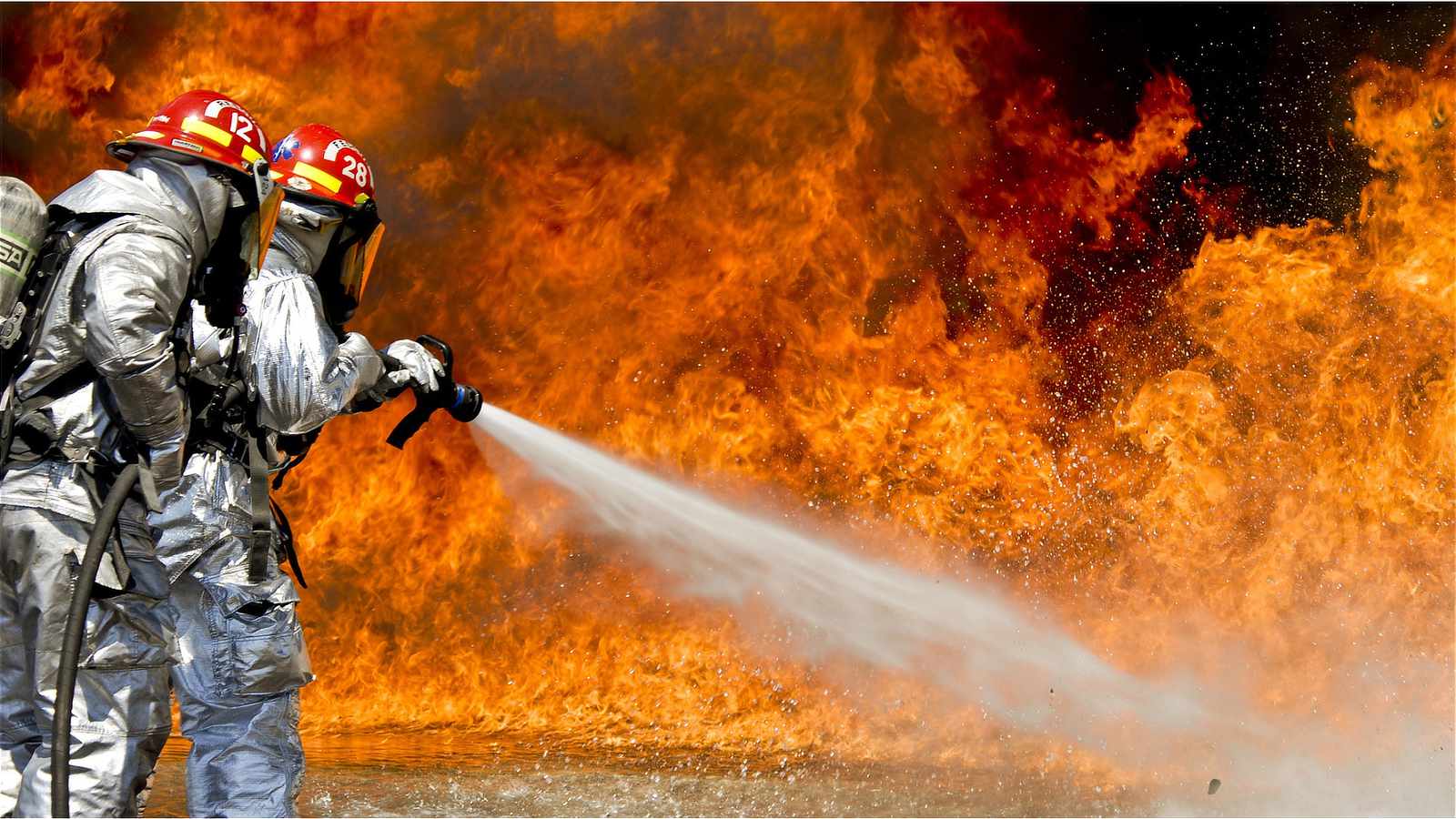
The destructive fires sweeping through France and Spain, following recent emergencies in Greece and other parts of southern Europe, should be treated as a warning to South Africa that extreme heat, shifting rainfall patterns and rapidly changing vegetation conditions are creating a far more volatile fire environment.
Riskonet Africa says wildfires can no longer be viewed as seasonal events managed by emergency services. They must be treated as strategic risks capable of disrupting communities, agriculture, forestry, water systems, infrastructure, insurance portfolios, and supply chains at the same time.
“Europe is showing us what happens when abnormal heat meets dense, dry vegetation and intense winds. The result is not simply a larger fire. It is a systemic event that can overwhelm response capacity and cause losses across an entire region,” says Volker von Widdern, Head: Strategic Risk at Riskonet Africa.
South Africa already has the underlying conditions for greater exposure. The World Bank’s Climate Risk Country Profile notes that about half the country is classified as arid or semi-arid, while temperatures have risen by about 1.5°C since the 1960s. Temperature extremes have also increased in frequency and intensity. Under a high-emissions scenario, average temperatures are projected to rise twice as much in the next decade and even further by the 2050s, with more intense heatwaves and a sharp increase in extremely hot days.
The World Bank Profile identifies drought, floods, and wildfires as South Africa’s three most significant drivers of climate-related disasters. Together, climate disasters have historically caused an estimated R3 billion in damage each year, while wildfire losses to agriculture and forestry are already significant.
Von Widdern says the European fires illustrate why risk analysis must move beyond historical trends.
“Decades of higher global temperatures are changing snow and ice cover, ocean conditions, and atmospheric circulation. At the same time, wetter seasons can accelerate vegetation growth, while changes in grazing and land use can add further fuel. When an intense heatwave follows, the fire load can become exceptionally difficult to control.”
He also points to apparent changes in the familiar El Niño cycle, which South Africa has historically experienced over five to seven years, but which may now be becoming shorter and sharper.
Von Widdern cautions that not every link in this chain can be predicted with certainty. That is precisely why scenario planning is essential.
“The question for risk leaders is not whether every climate mechanism can be forecast perfectly. It is whether organisations have considered credible cause-and-effect scenarios and tested what those scenarios would do to their people, assets, suppliers, and operating regions. Maximum risk tolerance measures should be applied to high exposure scenarios. It’s too late to remove vegetation during heatwaves or hope that additional water bombing aircraft will be available after wildfires have started.”
For South African businesses, the immediate task is to identify sites and supply routes exposed to grassland, bush and forest fires, assess whether firebreaks and water reserves remain adequate under hotter conditions, test evacuation, and business continuity plans, and examine dependencies on municipalities, emergency services, and vulnerable suppliers.
The consequences extend well beyond direct damage. Wildfires can destroy grazing and crops, degrade water quality through ash and sediment, interrupt electricity and communications, close roads, reduce tourism activity and render projects or communities temporarily unviable. Where several risks occur together, such as fire, drought and water shortages, recovery becomes slower and more expensive.
Von Widdern says the risk community must act before the next emergency.
“Risk professionals, insurers, boards, municipalities, and infrastructure operators need to build extreme-weather scenarios into investment decisions, project feasibility studies, asset management, and supply-chain planning. Fire risk cannot remain a once-a-year compliance exercise. It must become part of continuous strategic risk management.
“Many parts of the earth are already overheating. South Africa’s choice is whether to prepare while there is still time or wait until an uncontrollable event exposes the cost of inaction.”